


Vibe coding is the process of developing software with AI by describing in natural language what to build and letting the model do the technical work required. Coined by Andrej Karpathy, it has risen in popularity, making software development accessible to anyone with an internet connection and an AI chatbot subscription.
To see this in action, consider a real-life example of an app I recently vibe coded.
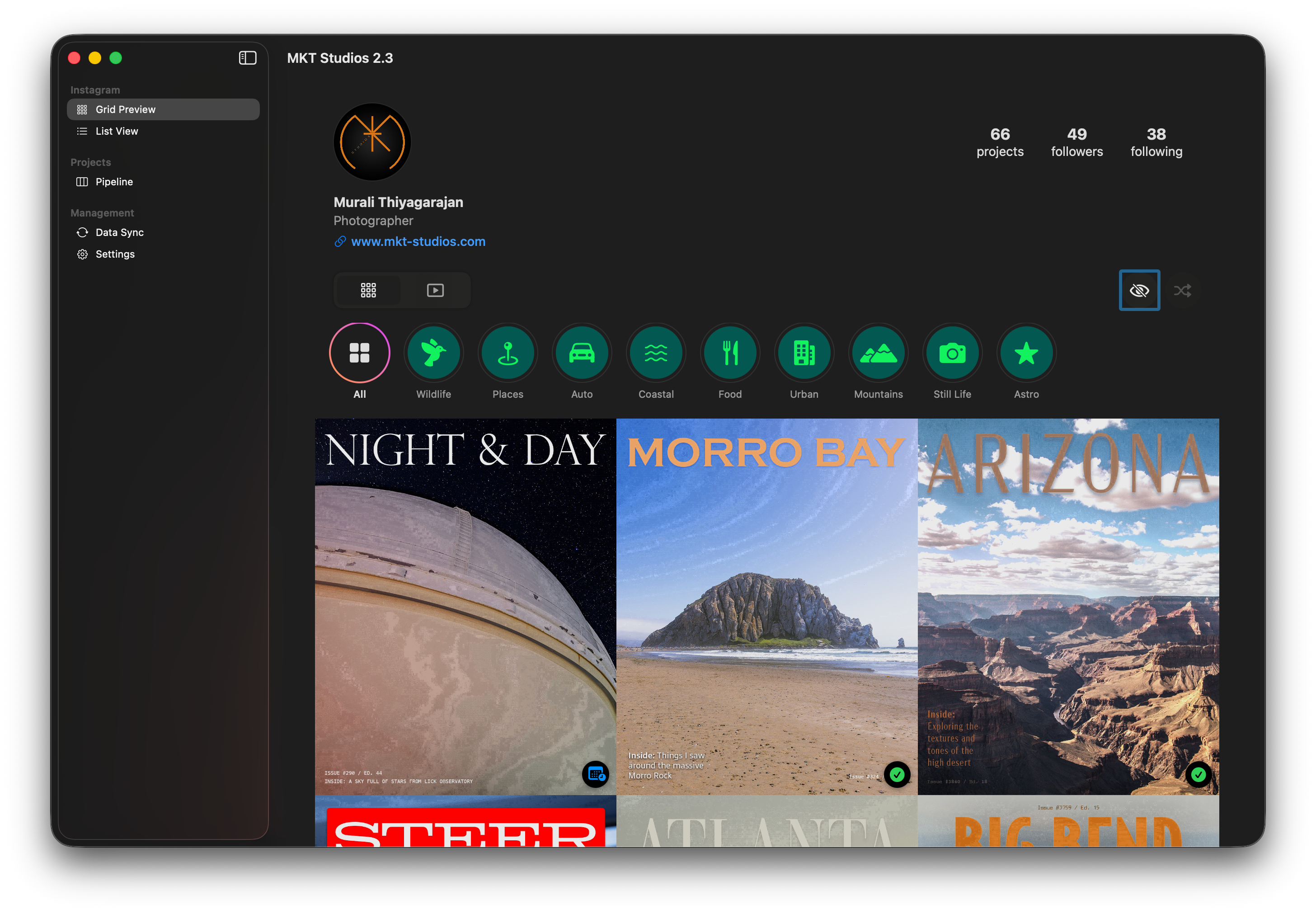
As a creator, I post my photos on Instagram. I plan my posts in advance, including what to post, when to post it, what features to highlight, descriptions, hashtags, and other metadata. As a visual thinker who likes to keep things organized, I wanted an easy way to accomplish two goals:
A project management tool: A workspace tailored specifically for Instagram posts to help me plan and store all metadata for past and future posts.
A visual grid planner: An interface to preview my Instagram profile, allowing me to try different arrangements of posts and story highlights so I can see exactly what my feed looks like before publishing.
I did a cursory search to see if any free, readily available tools fit the bill. All I found were freemium, web-based applications. I preferred a Mac-native app that kept my data stored locally. This felt like the perfect opportunity to vibe code, as I had a specific, personal, persistent need that I could articulate clearly. After all, software development is what I do for a living, and I have computer engineering experience programming apps.
Using plain English, I articulated the software I wanted to Gemini, and it wrote the code to create an app with the exact user interface, features, and privacy protections I requested. In a matter of a few hours, I had a tailored tool that I now use daily to plan and visualize my Instagram posts.
The Prosumer Breakthrough
I am by no means an early adopter of vibe coding. Andreessen Horowitz ranked consumer and prosumer vibe coding tools, such as Lovable and Replit, as the breakout productivity trend of 2025—and this wave shows no signs of slowing down.
The prosumer gains are undeniable. AI tools are significantly benefiting software professionals. According to a 2025 Google survey, 90% of respondents reported using AI tools at work—up 14% from the prior year—with over 80% noting that AI made them more productive. Anecdotally, I agree. I use AI at work for research, brainstorming, and prototyping. It has made me noticeably more productive, allowing me to spend more time thinking and less time executing.
In theory, AI proliferation should translate to higher value for both the enterprise and end consumers. But how will vibe coding influence consumer software at scale?
Hyperpersonalized Software
The single biggest advantage of building my own app over buying a mass-market alternative was hyperpersonalization. The app I vibe coded was custom-fitted to my exact workflow and aesthetic preferences. I no longer had to settle for software simply because its feature set checked most of my boxes. I just needed to know what to ask for and how to ask it.
Is hyperpersonalization enough to help vibe coding cross the chasm into becoming the primary way consumers use software? Will build ultimately prevail over buy?
Consider an analogy: almost everyone would look better in custom-fitted garments. However, fast fashion became the default attire because of mass-production cost efficiencies and a scarcity of affordable bespoke tailors. Industrialization improved affordability, making off-the-rack clothing standard.
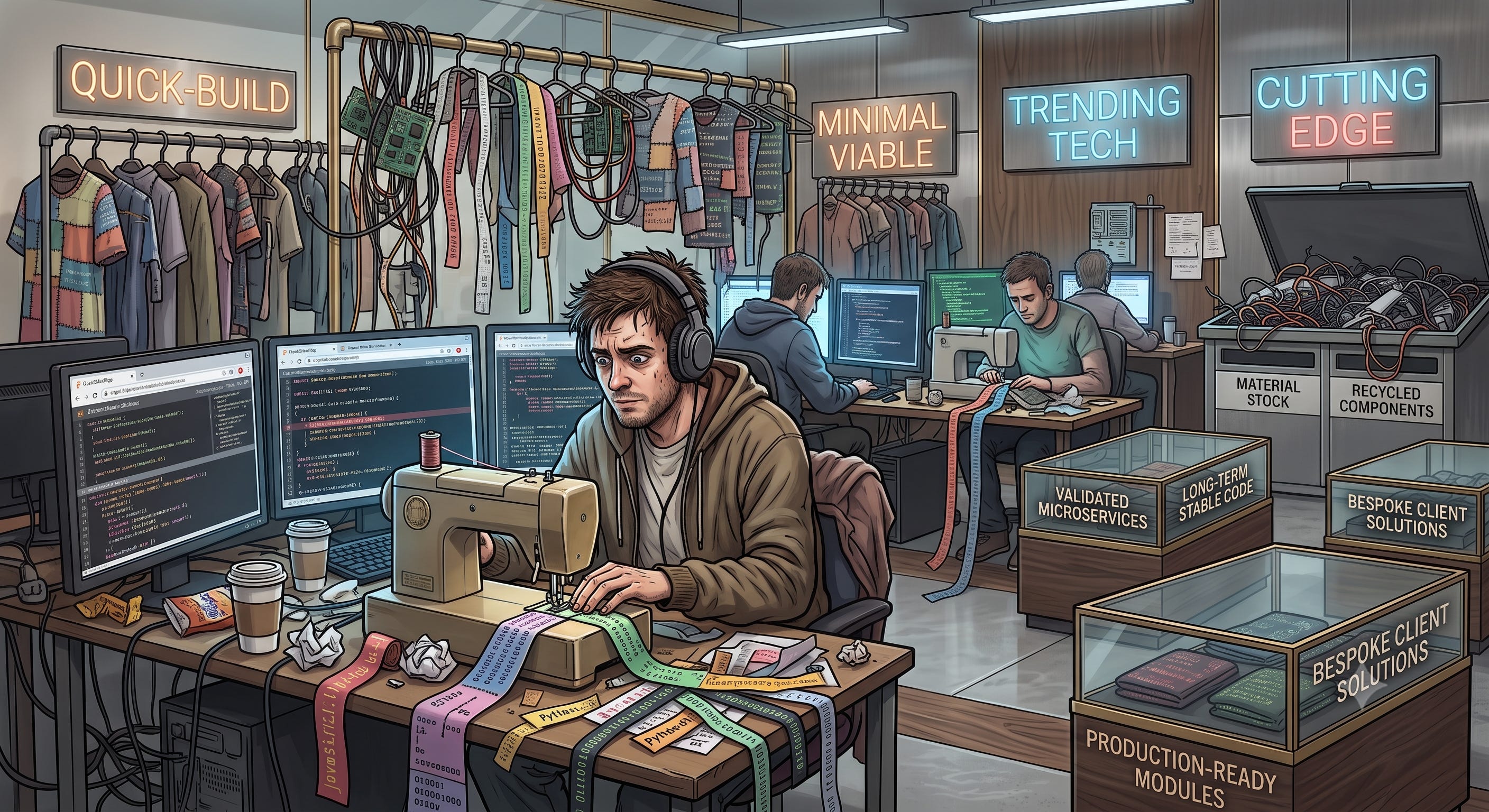
Mass-market software thrived for similar reasons: the high fixed costs of software infrastructure and the specialized skills required to program applications meant scale and standardized user experiences were the logical paths forward.
Can vibe coding eliminate these historical barriers?
Cost Efficiencies
Vibe coding effectively makes front-end code generation free, but underlying infrastructure remains expensive. The moment a hyperpersonalized app requires cloud synchronization, push notifications, or API authentication, the user stops being a casual creator and is forced into the role of a DevOps engineer—reintroducing the technical barrier. While platforms like Lovable and Replit aim to abstract this friction, users still face real constraints: recurring compute costs and the risks of delegated security permissions.
Specialized Skills
Vibe coding shifts the skill sets required to build software. You no longer need to master syntax, complex architecture, or design patterns. Instead, success requires:
An underlying, well-defined need
The ability to articulate that need clearly
The willingness to spend time building and testing
Patience to QA, iterate, and refine
The persistence to maintain and update the software over time
Skills will remain a meaningful barrier. Humans are not naturally adept at articulating precise technical constraints. We are impatient by nature, and we prefer to spend our limited energy on outcomes rather than maintenance. A mainstream consumer must be highly motivated to vibe code a hyperpersonalized solution from scratch.
The Opportunity for Mass-Market Software
The popularity of vibe coding and agentic engineering presents a massive opportunity for scaled, mass-market applications: ephemeral experiences.
As the cost of generating UI on the fly approaches zero, scaled apps no longer need to rely solely on rigid, one-size-fits-all features. Instead, they can generate ephemeral, hyperpersonalized experiences dynamically. Mass-market software will thrive by pairing robust backend infrastructure with a generative frontend customized to each user. Imagine opening your favorite app and having its interface instantly structure itself around your exact intent.
Vibe coding is here to stay, but so are mass-market applications. What will continue to evolve are our needs and expectations, and the solutions that adapt most seamlessly are the ones that will survive and thrive.
And for those who haven’t tried building your own software yet, I strongly recommend it. It is engaging, empowering, and deeply satisfying. There has never been a better time to build.